Engaging with Non-Human perspectives through a co-design design practice
Role: Researcher and co-design workshop designer
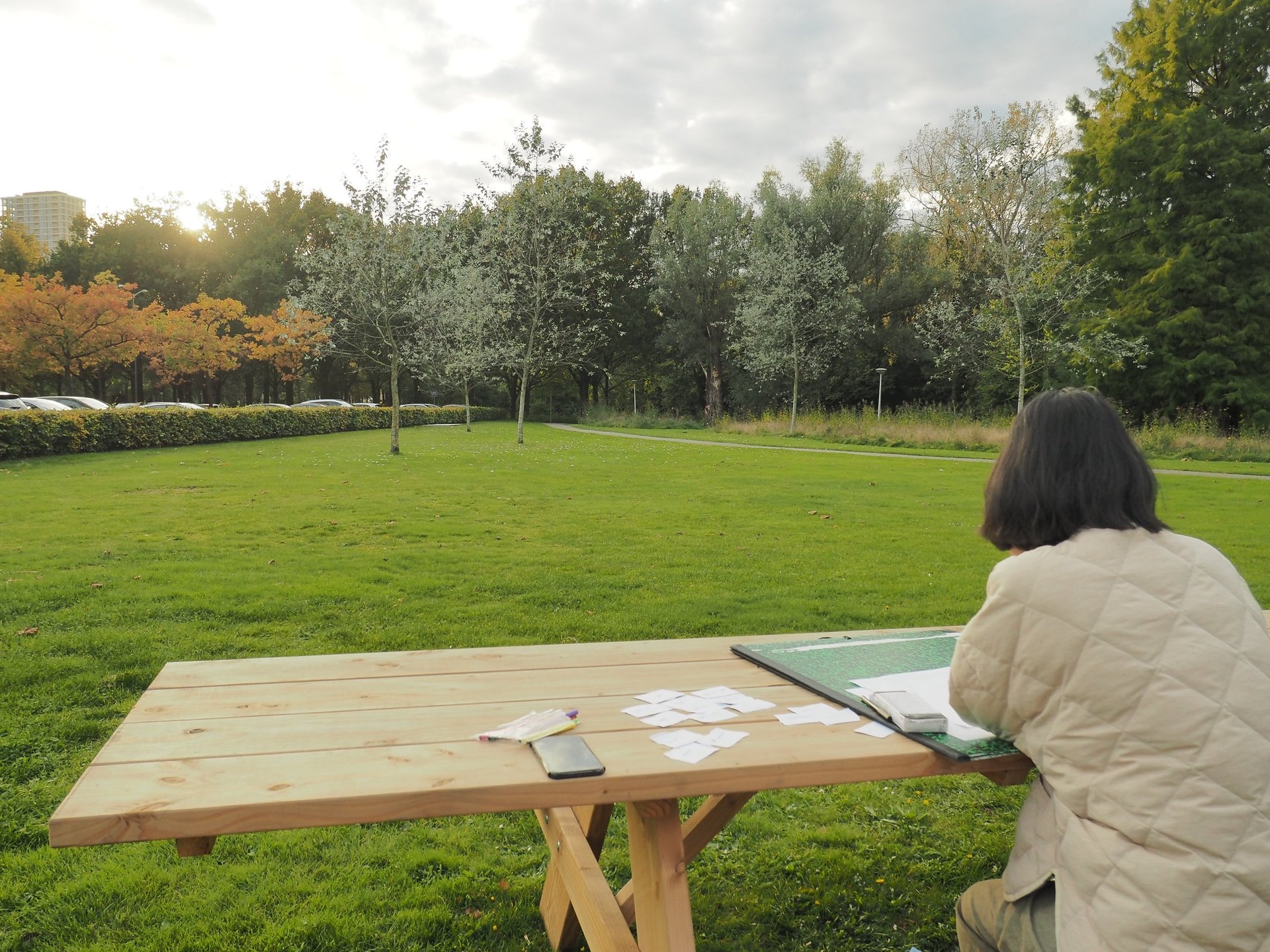
Context: TU/e green space near Hubble Café
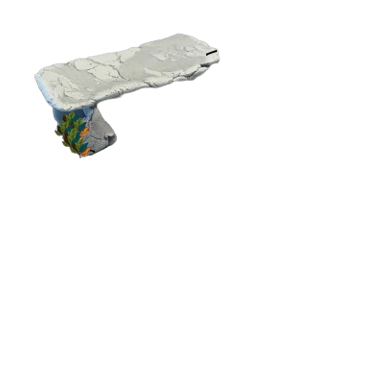
Co-design can be defined as the process of active collaboration between stakeholders in designing solutions. It was proposed as a research-through-design method, incorporating prototype development with iterative cycles which enhanced stakeholder engagement and actively acknowledged their contributions. The process engaged participants in designing a lo-fi public outdoor bench concept fostering reflection of diverse human and nonhuman values and needs.
Methods: Stakeholder interviews, site observation, nonhuman persona cards, guided walk, collaborative modelling
Outcome: Three-phase co-design workshop and actionable requirements for an inclusive bench
Status: Research-through-design study; foundation for Antsy Bench
Why?
TU/e’s biodiverse campus is managed and used largely through human priorities. Interviews showed that the people who use, maintain and protect the site bring different needs, while nonhuman species have no direct voice in public-space decisions.
I explored whether a structured co-design workshop could make these perspectives visible and translate them into practical design requirements

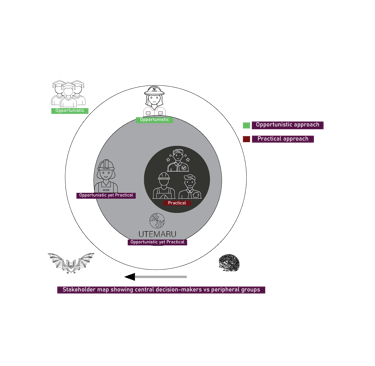
Showcasing who took an opportunistic and practical appraoch within their decision making
Naturally stakeholders who are willing to innovate with other perspectives were often side-lined and naturally became an afterthought. There was a power imbalance
Scope
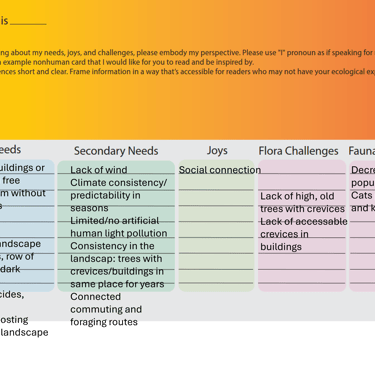
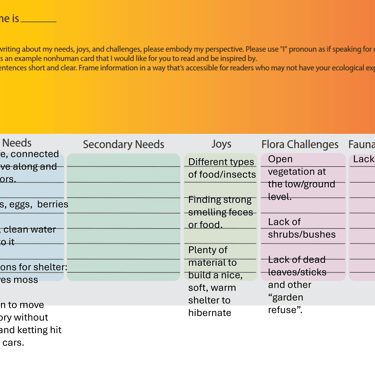
I focused on the green space near Hubble Café at TU/e. I interviewed six human stakeholders: a landscape architect, quality assurance representative, ecologists, Heijmans maintenance staff and students. Bats and hedgehogs were represented through ecologist-informed persona cards, which surfaced their habitat needs, pressures and dependencies alongside human priorities.



Goal & Insight
How might a co-design workshop help stakeholders consider human and nonhuman needs together when developing a public bench for the TU/e green space
Approach & Results
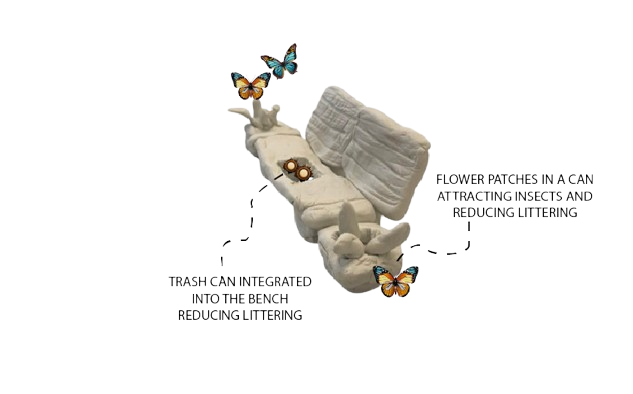
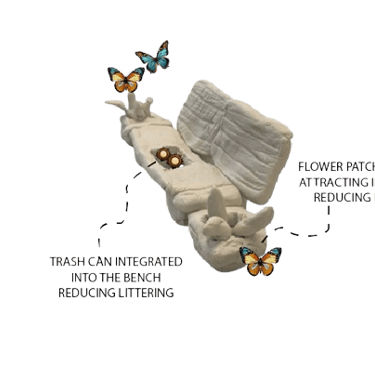
The workshop produced a set of design requirements for a nature-inclusive public bench, while demonstrating a co-design format that gave ecological perspectives a more explicit role in the discussion. It became the research foundation for Antsy Bench, where these requirements were developed into a modular public-furniture proposal
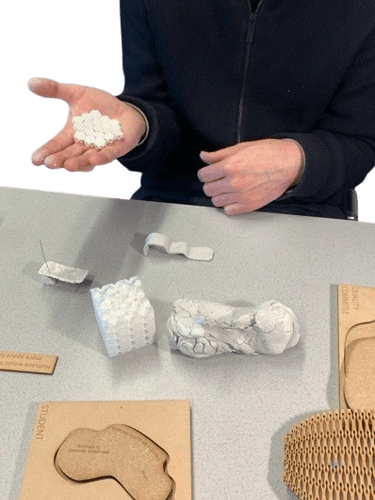
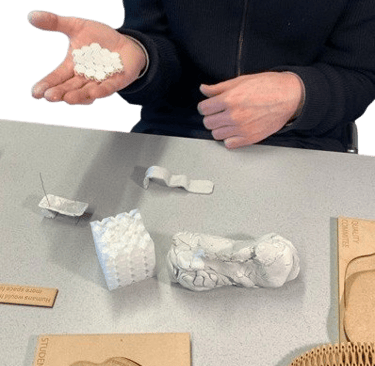

Phase 1: Guided site walk
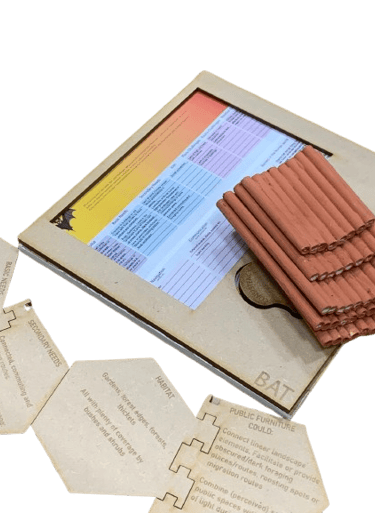
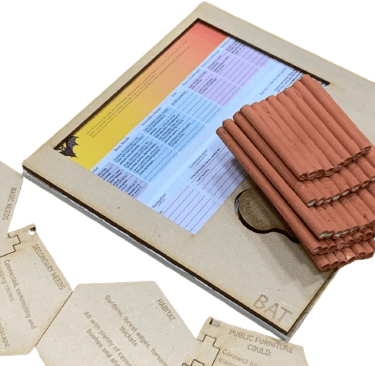
Phase 2: Imagine & Create
Phase 3: Specify
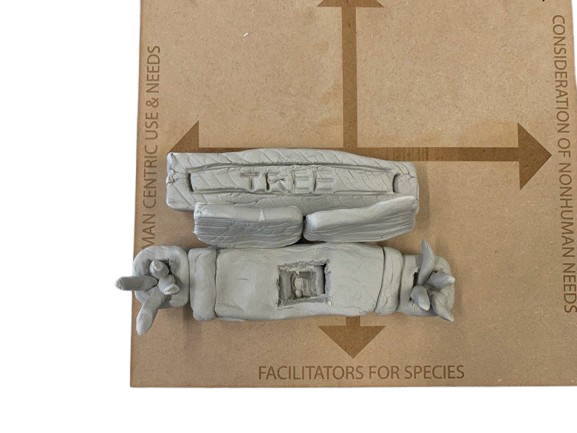
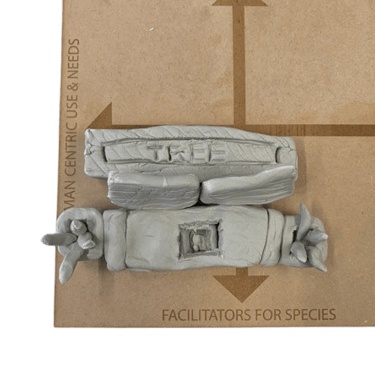
Having revealed human-centric power dynamics on TU/e's "biodiverse" campus, I designed a three-phase co-design workshop to counter this. Phase 1 (Accustom): Guided site walk for deeper environmental noticing. Phase 2 (Fantasy): Iterative clay modeling using laser-etched stakeholder value prompts. Phase 3 (Implementation): Extracting specific, achievable bench design requirements for the green space. Each phase was designed to keep ecological and human considerations connected and inclusive.